• Home
  • Stefania Attolini
  • Actualités et Approfondissements
  • Projets
    • T.E.D. – Teaching Environmental Democracy – Project
    • Democracy for Europe and Humanity: EUMANITY DEMOS
      • Working Group on “Environmental Democracy”
  • Publications
  • Contactez moi
  • Home
Stefania Attolini
  • Home
  • Stefania Attolini
  • Actualités et Approfondissements
  • Projets
    • T.E.D. – Teaching Environmental Democracy – Project
    • Democracy for Europe and Humanity: EUMANITY DEMOS
      • Working Group on “Environmental Democracy”
  • Publications
  • Contactez moi
  • Home
Stefania Attolini
Stefania Attolini
  • Home
  • Stefania Attolini
  • Pubblicazioni
  • Notizie & Eventi
  • Contatti
  • FrançaisFrançais
  • Tag:

    développement technologique

    ActualitésApprofondissements

    The EU Publishes the Code of Practice on Transparency of AI-Generated Content

    by Stefania Attolini 10 juin 2026

    Code of Practice on Transparency of AI-Generated Content

    On 10 June 2026, the European Commission published the final Code of Practice on Transparency of AI-Generated Content, a voluntary instrument designed to help providers and deployers of generative AI systems comply with the transparency obligations established by the EU AI Act. These obligations will start to apply on 2 August 2026.

    The Code addresses one of the most pressing challenges raised by generative AI: how to ensure that citizens can recognise when content has been created or manipulated by artificial intelligence. As synthetic text, images, audio and video become increasingly sophisticated, transparency is emerging as a key tool for preserving trust in the information ecosystem and reducing the risks of misinformation, manipulation and deception.

    The document is divided into two sections:

    • The first concerns providers of generative AI systems and explains how AI-generated or AI-manipulated content should be marked and made detectable. The Code is structured around four core commitments concerning the marking of AI-generated content, the provision of detection mechanisms, compliance with quality requirements such as effectiveness, reliability, robustness and interoperability, and the establishment of testing and compliance procedures. To this end, it promotes a multi-layered approach based on machine-readable metadata, watermarking techniques and detection mechanisms capable of identifying synthetic content.
    • The second section focuses on deployers of AI systems, clarifying their obligations to label deepfakes and AI-generated or AI-manipulated content published on matters of public interest. The objective is to guarantee that users receive clear information when interacting with synthetic content and can make informed decisions about its reliability.

    Although voluntary, the Code is likely to play an important role in the implementation of the AI Act. Once approved by the European Commission and the AI Board, adherence to the Code may help organisations demonstrate compliance with the transparency requirements set out in Article 50 AI Act.

    Beyond its practical relevance, the initiative reflects the broader European approach to AI governance: promoting innovation while ensuring accountability, transparency and the protection of fundamental rights. In this respect, the Code represents another significant step towards the development of a trustworthy and human-centric AI ecosystem in Europe.

    The publication of the Code does not conclude the implementation process. The European Commission has announced that the Code will be complemented by forthcoming Guidelines on the transparency obligations under Article 50 of the AI Act. These Guidelines are expected to clarify the scope of the legal requirements, address issues not covered by the Code, and provide practical guidance for providers and deployers. Their publication will be particularly important in resolving interpretative questions concerning the notions of AI-generated and AI-manipulated content, the disclosure obligations applicable to deepfakes, and the relationship between transparency requirements and editorial control. As such, the Code should be viewed as an important first step within a broader regulatory framework that is still evolving.

     

    10 juin 2026
    0 FacebookPinterestLinkedinWhatsappEmail
    Actualités

    Human Rights Dialogues – Focus on women’s rights 

    by Stefania Attolini 18 mars 2024

    Pour la quatrième année, je participerai à l’édition de Human Rights Dialogues – Focus on women’s rights promue par Mme Claudia MORINI (Professeure de droit de l’Union européenne, Università del Salento) titulaire du Module Jean Monnet EU PRO WOMEN.

    J’interviendrai le 15 avril prochain sur le sujet suivant « THE RIGHT TO ACCESS TO NEW TECHNOLOGIES: AN EMERGING
    TOOL TO DIMINISH GENDER GAP AND TO IMPROVE WOMEN’S EMPOWERMENT ».

    Ci-dessous le programme de toutes les interventions:

    March 19, 2024
    Dr. FRANCESCO SPERA: GENDER EQUALITY AND EQUAL PAY: THE IMPACT OF EU SOFT LAW

    March 26, 2024
    Prof. ÁGNES SÁNTHA: THE SOCIOLOGICAL IMPLICATION OF WOMEN’S EMPOWERMENT: A
    SPECIAL FOCUS ON QUALITY OF LIFE AND WORK-LIFE-BALANCE

    April 9, 2024
    Dr. SILVIA SOLIDORO: BUSINESS AND HUMAN RIGHTS: RELEVANT MECHANISMS
    ESTABLISHED AT THE INTERNATIONAL LEVEL TO IMPLEMENT GENDER JUSTICE

    April 15, 2024
    Prof. STEFANIA ATTOLINI: THE RIGHT TO ACCESS TO NEW TECHNOLOGIES: AN EMERGING
    TOOL TO DIMINISH GENDER GAP AND TO IMPROVE WOMEN’S EMPOWERMENT

    April 23, 2024
    Prof. MAURA MARCHEGIANI: THE IMPACT OF INTERNATIONAL MIGRATIONS ON WOMEN


    Voici les ppt que j’utiliserai dans mon intervention.


    18 mars 2024
    0 FacebookPinterestLinkedinWhatsappEmail
    Approfondissements

    Digital Services Act – DSA

    by Stefania Attolini 25 février 2024

    Le Règlement relatif à un marché unique des services numériques et modifiant la directive 2000/31/CE (règlement sur les services numériques – DSA) est désormais applicable dans sa totalité.

    Depuis le 17 février 2024 toutes les obligations prévues dans le texte du règlement lient toute plateforme numérique qui -quel que soit le lieu de leur établissement (dans ou hors l’Union)- offre des services « intermédiaires », tels que le « simple transport », la « mise en cache » ou encore l' »hébergement », aux personnes physiques ou morales dont le lieu d’établissement est l’Union ou qui sont situées dans l’Union.

    Le Règlement, modifiant la Directive 2000/31/CE sur le commerce électronique, prévoit une série d’obligations pour les fournisseurs de services numériques aptes à garantir la protection des consommateurs, la transparence de la fourniture des services et la lutte contre les comportements illicites en ligne.

    Des obligations supplémentaires (déjà applicables depuis août 2023) sont prévues pour les fournisseurs de très grandes plateformes en ligne et les très grands moteurs de recherche en ligne, vu l’impact potentiel que leur activité peut avoir sur le marché. Il leur est demandé d' »évaluer les risques systémiques découlant de la conception, du fonctionnement et de l’utilisation de leurs services, ainsi que des abus potentiels par les destinataires du service », ainsi que de « prendre des mesures d’atténuation appropriées, dans le respect des droits fondamentaux » (considérant 79).

    Le législateur européen a identifié quatre catégories de risques systémiques sur lesquels leur attention doit se focaliser :

    a. Les risques associés à la diffusion de contenus illicites ;

    b. L’incidence réelle ou prévisible du service sur l’exercice des droits fondamentaux, (par exemple, la dignité humaine, la liberté d’expression et d’information, le droit à la vie privée, la protection des données, le droit à la non-discrimination, les droits de l’enfant et la protection des consommateurs), qui puissent dériver par exemple de l’utilisation des algorithmes ;

    c. Les risques concernant les effets négatifs réels ou prévisibles sur les processus démocratiques, le discours civique et les processus électoraux, ainsi que sur la sécurité publique ;

    d. Les risques concernant des comportements ayant un effet négatif réel ou prévisible sur la protection de la santé publique et des mineurs, ainsi que des conséquences négatives graves sur le bien-être physique et mental d’une personne, ou sur la violence à caractère sexiste.

    En outre, l’article 49 du DSA, oblige chaque Etat à désigner une ou plusieurs autorités (indépendantes) compétente(s) comme responsables de la surveillance des fournisseurs de services intermédiaires et de l’exécution du règlement ainsi que comme leur coordinateur pour les services numériques.

    L’Etat français a désigné l’Autorité de régulation de la communication audiovisuelle et numérique (Arcom) comme autorité compétente pour la surveillance des fournisseurs de services intermédiaires et de l’exécution du règlement.

    En Italie, par le decreto legge n. 123/2023, publié au Journal officiel n.216 du 15 septembre 2023, l’AGCOM – Autorità garante della concorrenza e del mercato [Autorité de la concurrence et du marché, en français] a été officiellement désignée comme coordonnateur des services numériques, conformément au texte du DSA (Digital Service Act).


    25 février 2024
    0 FacebookPinterestLinkedinWhatsappEmail
    Actualités

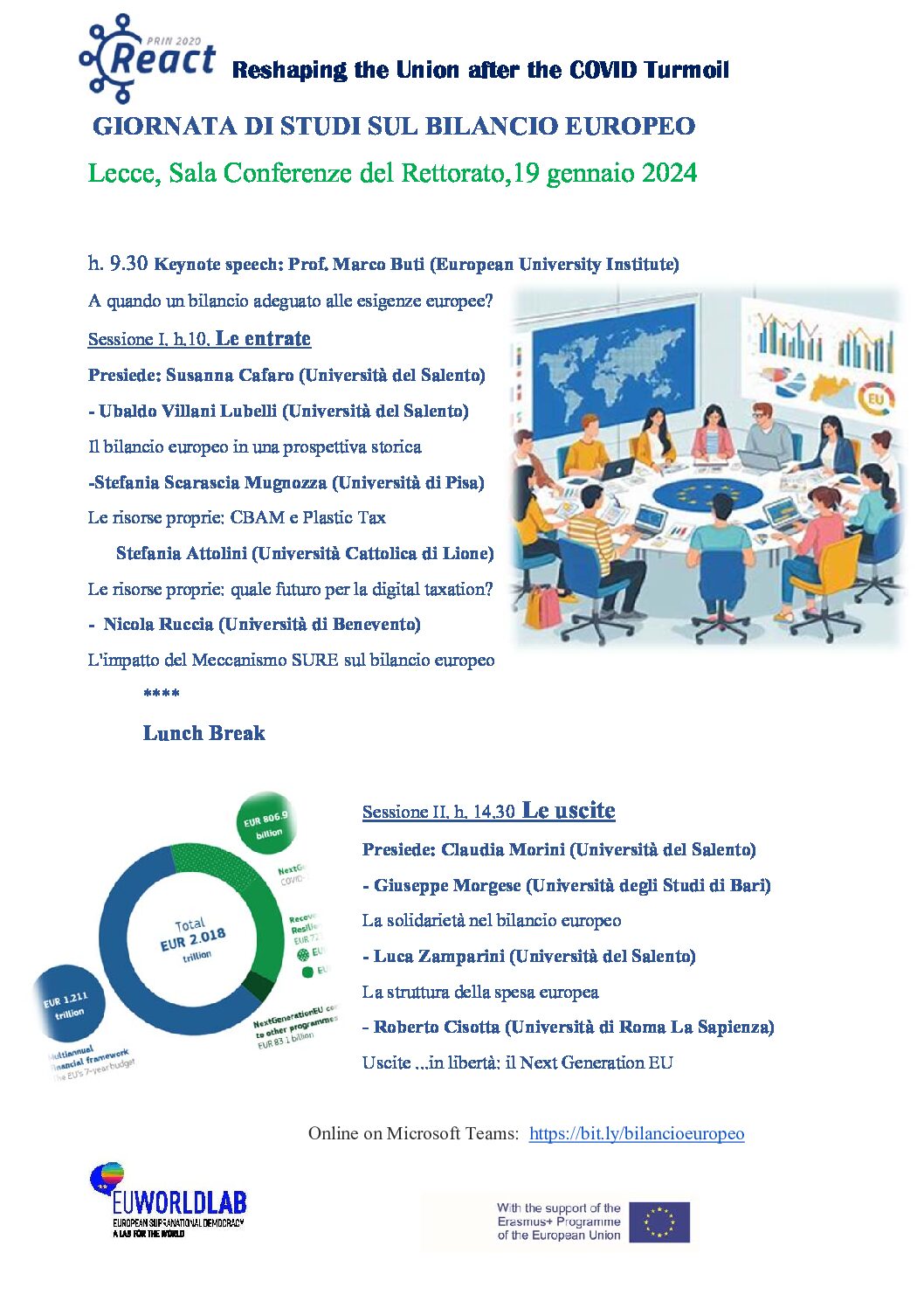
    Giornata di studi sul bilancio europeo (Journée d’études sur le budget européen)

    by Stefania Attolini 15 janvier 2024

    Une journée entièrement consacrée à l’avenir du budget de l’Union européenne à l’Università del Salento.

    Mon intervention sera dédiée à l’évolution de la Digital Tax.


    15 janvier 2024
    0 FacebookPinterestLinkedinWhatsappEmail
    Actualités

    INTELLIGENCE ARTIFICIELLE ET SANTE

    by Stefania Attolini 25 avril 2023

    Ravie d’avoir participé à la Conférence sur “Les enjoux juridiques et éthiques de l’Intelligence Artificielle dans le domain de la santé” et d’avoir eu l’occasion d’échanger avec des collègues si experts dans le domain de l’intelligence artificielle appliquée au secteur de la santé.


    Ci-dessous le lien du communiqué de presse du Centre de recherches critiques sur le droit (CERCRID)

    RETOUR SUR UNE CONFÉRENCE PASSIONNANTE SUR LA RÉGULATION DE L’IA EN MATIÈRE DE SANTÉ


    25 avril 2023
    0 FacebookPinterestLinkedinWhatsappEmail
    juin 2026
    L M M J V S D
    1234567
    891011121314
    15161718192021
    22232425262728
    2930  
    « Mai    

    Qui Suis-Je?

    Qui Suis-Je?

    Stefania Attolini, Ph.D

    Juriste et chercheuse en droit de l’Union européenne, spécialisée dans les enjeux juridiques de la transition numérique et verte, la démocratie environnementale et la gouvernance des données. À l’Université Catholique de Lyon (UCLy), j’enseigne le droit public européen et je coordonne le projets Erasmus+ TED (Teaching Environmental Democracy). Je participe aussi à d'autres projets européens consacrés à la démocratie délibérative, à l’innovation pédagogique et aux politiques environnementales européennes.

    Rester en contact

    Facebook Instagram Linkedin Email Whatsapp

    Messages récents

    • The EU Publishes the Code of Practice on Transparency of AI-Generated Content

      10 juin 2026
    • The EU Strategic Roadmap for Digitalisation and AI in the Energy Sector: Pillars and Flagship Actions

      4 juin 2026
    • European Tech Sovereignty and Open Source: The European Commission’s New Digital Strategy

      4 juin 2026
    • Meta v Commission : The General Court Clarifies the Scope of Judicial Review under the DMA

      3 juin 2026
    • Magnifica Humanitas: Artificial Intelligence as a New Social Question

      1 juin 2026

    Categoriés

    • Actualités (30)
    • Approfondissements (10)
    • Liens utiles (3)
    • Projects (4)
    • TED Project (4)
    • TEDNews (2)
    • Facebook
    • Twitter
    • Instagram
    • Linkedin

    @2024 - Stefania Attolini | Privacy Policy - Cookie Policy | Powered by LnW Digital Strategies


    Retour au sommet
    Stefania Attolini
    • Home
    • Stefania Attolini
    • Actualités et Approfondissements
    • Projets
      • T.E.D. – Teaching Environmental Democracy – Project
      • Democracy for Europe and Humanity: EUMANITY DEMOS
        • Working Group on “Environmental Democracy”
    • Publications
    • Contactez moi