• Home
  • Stefania Attolini
  • Actualités et Approfondissements
  • Projets
    • T.E.D. – Teaching Environmental Democracy – Project
    • Democracy for Europe and Humanity: EUMANITY DEMOS
      • Working Group on “Environmental Democracy”
    • Understanding Environmental Democracy
  • Teaching Material
    • Artificial Intelligence
  • Publications
  • Home
Stefania Attolini
  • Home
  • Stefania Attolini
  • Actualités et Approfondissements
  • Projets
    • T.E.D. – Teaching Environmental Democracy – Project
    • Democracy for Europe and Humanity: EUMANITY DEMOS
      • Working Group on “Environmental Democracy”
    • Understanding Environmental Democracy
  • Teaching Material
    • Artificial Intelligence
  • Publications
  • Home
Stefania Attolini
Stefania Attolini
  • Home
  • Stefania Attolini
  • Pubblicazioni
  • Notizie & Eventi
  • Contatti
  • FrançaisFrançais
  • Catégorie

    Actualités

    Actualités

    Circular Economy and Europe’s New Environmental Strategy

    by Stefania Attolini 28 mai 2026

    Environmental policy in the European Union is increasingly becoming an industrial and geopolitical strategy.

    With the European Commission expected to present the forthcoming Circular Economy Act in 2026, the EU appears determined to move beyond traditional waste management and reshape the European Single Market around sustainability, resource efficiency, and strategic autonomy.

    Current policy discussions suggest that the future legislative framework may seek to strengthen the market for secondary raw materials, harmonise “end-of-waste” criteria across Member States, and reinforce circular design requirements for products and industrial supply chains.

    The initiative also reflects a broader transformation of EU environmental governance: ecological transition is now closely connected to competitiveness, industrial resilience, and digital regulation.

    In this sense, the circular economy is no longer presented merely as an environmental objective, but as a core element of Europe’s economic and regulatory future.

    One key question nevertheless emerges: can the EU reconcile ecological transition, industrial competitiveness, and regulatory coherence without weakening its environmental ambitions?

    Here is the European Commission’s overview of the EU Circular Economy strategy:
    https://environment.ec.europa.eu/strategy/circular-economy_en
    28 mai 2026
    0 FacebookPinterestLinkedinWhatsappEmail
    ActualitésApprofondissements

    Artificial Intelligence and the Rise of Europe’s Regulatory Power

    by Stefania Attolini 28 mai 2026

    Artificial intelligence is no longer merely a technological issue: it has become a constitutional, economic, and geopolitical one.

    With the AI Act, the European Union is attempting to build the world’s first comprehensive legal framework for AI regulation, based on a risk-oriented approach aimed at balancing innovation, fundamental rights protection, and security.

    In doing so, Europe is pursuing a path distinct from both the American and Chinese models: neither complete deregulation nor centralized state control.

    One crucial question nevertheless remains open:
    👉 can the EU transform its “regulatory power” into genuine technological leadership?

    Here is the official European Commission overview of the AI Act:
    AI Act – European Commission

    28 mai 2026
    0 FacebookPinterestLinkedinWhatsappEmail
    Actualités

    Visiting the European Institutions with the Students of the Diploma in Environmental Law

    by Stefania Attolini 20 mai 2026

    Visiting the European Institutions with the Students of the Diploma in Environmental Law


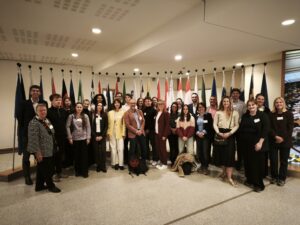
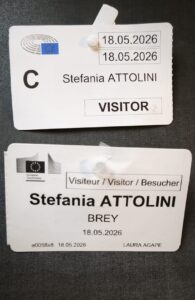
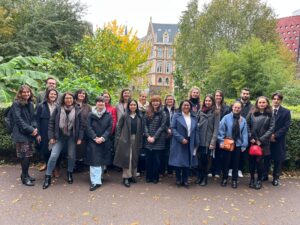
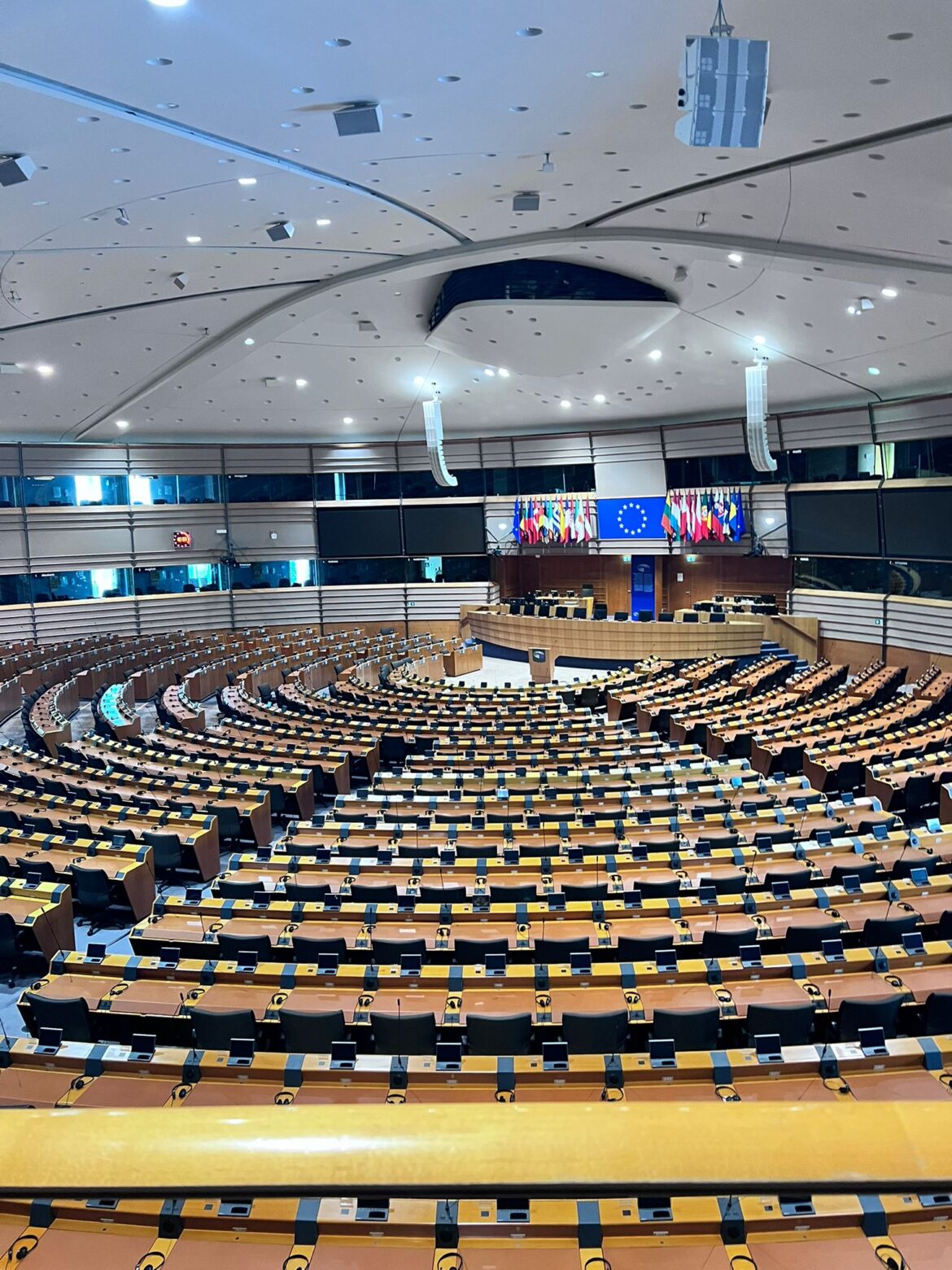
    On 18 May 2026, I had the pleasure of accompanying the second-year students of the Diploma in Environmental Law (DE Droit de l’environnement) of the Université Catholique de Lyon to Brussels for a study visit dedicated to European environmental governance and the functioning of the EU institutions.

    The visit took place within the framework of the Comparative Moot Court on Environmental Law (CMCEL), bringing together students from four European universities: the Université Catholique de Lyon, University College Dublin, Universität Münster and Universiteit Utrecht.

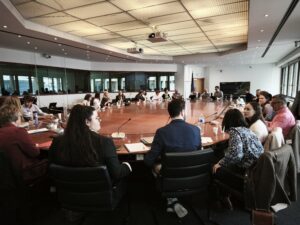
    The morning session was hosted by the Directorate-General for Environment (DG ENV) of the European Commission. Students presented the outcomes of the national moot court sessions to representatives of the Commission.

    The discussions provided a valuable opportunity to reflect on the implementation of European environmental law and on the role played by the European Commission in ensuring compliance with EU environmental standards.

    Students also attended a presentation on the role of the European Commission in the development and enforcement of environmental legislation within the European Union.

    In the afternoon, the group visited the European Parliament, where students had the opportunity to discover the functioning of the institution and discuss the role of democratic representation within the European legislative process.

    This visit once again highlighted the importance of connecting academic training with direct engagement with European institutions, allowing students to better understand the practical dimensions of European environmental governance and decision-making.


    20 mai 2026
    0 FacebookPinterestLinkedinWhatsappEmail
    ActualitésApprofondissements

    Commissione contro Ungheria, la Corte UE rafforza l’enforcement dei valori europei

    by Stefania Attolini 28 avril 2026

    Commissione contro Ungheria, la Corte UE rafforza l’enforcement dei valori europei

    28 avril 2026
    0 FacebookPinterestLinkedinWhatsappEmail
    ActualitésProjectsTED ProjectTEDNews

    Supranational Democracy Dialogues – VIII ed.

    by Stefania Attolini 24 avril 2026

    Teaching Environmental Democracy: Reflections from the Supranational Democracy Dialogues 2026

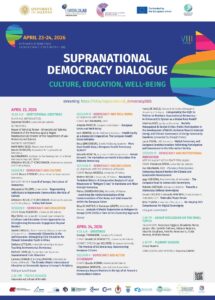
    On 23 April 2026, I had the pleasure of presenting my intervention entitled “Teaching Environmental Democracy: From Pedagogical Design to Democratic Tensions” during the VIII edition of the Supranational Democracy Dialogues, within the session dedicated to Democracy and Education.

    The presentation was inspired by the recently launched Erasmus+ project TED – Teaching Environmental Democracy, which I coordinate at the Université Catholique de Lyon (UCLy) in partnership with the Università del Salento, the Democracy and Culture Foundation (Athens), and CESUE / Focus Europe Italia.

    The intervention explored a central question: how can environmental democracy be taught today in a context marked by ecological urgency, democratic tensions, and growing complexity?

    Environmental democracy is often understood through procedural rights such as access to environmental information, public participation, and access to justice. However, contemporary environmental governance raises broader and more challenging questions related to democratic legitimacy, expertise, participation, urgency, and the shrinking of civic space.

    The presentation argued that teaching environmental democracy cannot be limited to explaining legal frameworks or institutional procedures. It also requires addressing tensions, contradictions, and real-world environmental conflicts, while encouraging students to develop critical thinking, deliberative skills, and democratic competences.

    Within the TED project, this pedagogical approach takes concrete form through the creation of a Students Assembly, where students are invited not only to analyse environmental issues but also to deliberate collectively and experience democratic decision-making processes in practice.

    One particularly interesting aspect discussed during the conference concerned the first empirical feedback collected from student representatives involved in designing the Students Assembly rules. Their responses revealed important tensions between participation and efficiency, inclusiveness and organisation, deliberation and decision-making — highlighting how environmental democracy is not a fixed model, but an evolving and contested process.

    The intervention concluded with a broader reflection on the role of universities in preparing future generations to navigate ecological transitions through legal knowledge, democratic participation, and interdisciplinary dialogue.

    The TED project will continue developing innovative teaching methodologies on environmental democracy throughout the 2025–2028 period, contributing to the broader debate on democracy, sustainability, and environmental governance in Europe.

    24 avril 2026
    0 FacebookPinterestLinkedinWhatsappEmail
    ActualitésProjectsTED ProjectTEDNews

    T.E.D. – Kick-off event

    by Stefania Attolini 17 mars 2026

    TED kick-off event (Programme)

    TED – Teaching Environmental Democracy: Kick-off Meeting in Lecce and Brindisi

    On 16–17 March 2026, the cities of Lecce and Brindisi hosted the kick-off meeting of TED – Teaching Environmental Democracy, an Erasmus+ KA220 project co-funded by the European Union and coordinated by the Université Catholique de Lyon (UCLy).

    The project brings together an international consortium composed of UCLy, the Università del Salento, the Democracy and Culture Foundation (Athens), and CESUE / Focus Europe Italia, with the aim of developing innovative teaching methodologies combining European environmental law, democratic participation and active citizenship.

    At the core of the project is the creation of a Students Assembly, an innovative pedagogical tool through which students will discuss and deliberate on concrete environmental law cases, experiencing participatory and deliberative democracy in practice.

    The kick-off meeting opened at the Rectorate of the Università del Salento with a public session dedicated to the importance of teaching environmental democracy. The project coordinator, Stefania Attolini, presented the objectives and long-term vision of TED, highlighting the need to strengthen environmental awareness and democratic participation among younger generations.

    The programme continued with operational working sessions dedicated to the design of TED’s pedagogical methodology and with meetings involving academics, researchers and student representatives from the partner institutions.

    On the second day, partners visited the United Nations World Food Programme (WFP) – UNHRD Base in Brindisi, exploring the role of environmental sustainability within humanitarian logistics and international cooperation.

    The kick-off concluded with a public event at Palazzo Nervegna in Brindisi focused on democracy, environmental awareness and European cooperation projects, followed by the first official coordination meeting of the consortium.

    The TED project will run from 2025 to 2028 and aims to create a joint training programme and certification in Environmental Democracy, integrating innovative educational practices into the curricula of the partner universities.

    17 mars 2026
    0 FacebookPinterestLinkedinWhatsappEmail
    ActualitésApprofondissements

    The EU Digital Omnibus Strategy: Why Is Europe Revising Its Digital Rulebook So Soon?

    by Stefania Attolini 20 novembre 2025

    On 19 November 2025, the European Commission unveiled its DIGITAL OMNIBUS STRATEGY, a broad simplification package designed to streamline key elements of the EU digital regulatory framework. The initiative accompanies legislative proposals amending several cornerstone instruments of EU digital law, including the GDPR, the Data Governance Act, the Data Act, the Open Data Directive, the ePrivacy framework, the AI Act, and cybersecurity legislation.

    At first sight, the proposal appears surprising. Most of the instruments targeted by the Digital Omnibus are not old legislation in need of modernization. On the contrary, they represent some of the most recent and ambitious components of the EU’s digital acquis. The Data Governance Act became applicable in 2023, the AI Act was adopted in 2024, and the Data Act only started to apply in September 2025.

    This raises an important question: why is the European Commission proposing amendments to legislation that has barely entered into force?

    From Regulatory Expansion to Regulatory Consolidation

    The answer offered by the Commission is revealing. The Digital Omnibus is not presented as a change of regulatory direction. Rather, it is described as a first step in a broader effort to “stress-test” the EU digital rulebook and ensure that digital legislation remains supportive of innovation, competitiveness and economic growth while preserving high levels of protection.

    According to the Commission, the rapid expansion of EU digital regulation over the last decade has created a complex legal landscape. Stakeholders have increasingly reported overlaps between legislative instruments, duplicative compliance obligations, legal uncertainty, fragmented reporting requirements, and difficulties understanding how different rules interact in practice.

    The Digital Omnibus therefore reflects a shift from the phase of regulatory construction to a phase of regulatory consolidation. Rather than introducing entirely new rules, the Commission seeks to simplify, align and rationalise the existing framework.

    Key Highlights

    1. Towards a “One Data Act” Approach

    One of the most significant elements of the proposal concerns the EU data framework.

    The Commission acknowledges that the current data acquis has become fragmented across multiple instruments. To address this, the Digital Omnibus proposes:

    the repeal of the Free Flow of Non-Personal Data Regulation while preserving its core principle of free movement of non-personal data within the EU;
    the integration of key provisions of the Data Governance Act and the Open Data Directive into a more coherent framework centred on the Data Act;
    simplification of rules governing data intermediation services;
    clarification of provisions relating to data sharing, cloud switching and public-sector access to data.

    The objective is to create a more coherent legal architecture capable of supporting data-driven innovation and strengthening the European data economy.

    2. Greater Legal Certainty for Data Protection and AI

    A second pillar of the strategy concerns the interaction between data protection law and artificial intelligence.

    The Commission identifies persistent uncertainty regarding:

    anonymisation and pseudonymisation techniques;
    the processing of personal data for scientific research;
    the use of personal data for the development and operation of AI systems;
    access rights under the GDPR;
    data protection impact assessments and risk assessment obligations.

    The proposed amendments seek to provide greater legal clarity without altering the fundamental principles of EU data protection law.

    Importantly, the Commission explicitly links these reforms to the objective of facilitating the development of trustworthy AI in Europe.

    3. Tackling “Consent Fatigue” and Cookie Banner Overload

    The Digital Omnibus also addresses one of the most visible sources of regulatory frustration for internet users: cookie consent banners.

    The Commission recognises the phenomenon of “consent fatigue”, whereby users are confronted with repetitive consent requests that undermine meaningful choice. To address this issue, the proposal includes:

    one-click consent mechanisms;
    machine-readable preference standards;
    enhanced use of browser-based preference signals.

    These measures aim to reduce compliance burdens while improving the effectiveness of privacy choices.

    4. Simplifying the Implementation of the AI Act

    The package includes a dedicated proposal amending the AI Act.

    The Commission emphasises that these changes do not alter the fundamental objectives of the AI Act. Instead, they are intended to facilitate implementation, reduce unnecessary administrative burdens, and improve legal certainty for businesses.

    The Commission also announces an extensive programme of guidance documents covering issues such as:

    high-risk AI classification;
    transparency obligations;
    incident reporting;
    fundamental rights impact assessments;
    interactions between the AI Act and other EU legislation, including data protection law and cybersecurity rules.

    5. A Single Cybersecurity Incident Reporting Mechanism

    Another major objective of the Digital Omnibus is the rationalisation of cybersecurity reporting obligations.

    The Commission proposes the creation of a single reporting mechanism capable of reducing overlaps between multiple notification requirements contained in different pieces of EU cybersecurity legislation.

    This responds directly to stakeholder concerns regarding duplicated reporting duties and administrative complexity.

    6. Repeal of Outdated Digital Legislation

    The proposal also repeals several instruments considered redundant or superseded by more recent legislation, including the Platform-to-Business Regulation and other data-related measures whose objectives are now covered by newer regulatory frameworks.

    A New Phase in EU Digital Governance

    Perhaps the most important aspect of the Digital Omnibus is not any individual amendment, but what it reveals about the evolution of EU digital governance.

    The Commission openly acknowledges that the challenge is no longer simply adopting new digital legislation. The challenge is ensuring that the growing body of digital regulation functions coherently as a system.

    The Digital Omnibus therefore represents the first large-scale attempt to review the cumulative effects of the EU digital acquis. It marks the beginning of what the Commission calls a broader Digital Fitness Check, a process intended to assess how the digital rulebook affects innovation, competitiveness and regulatory effectiveness across sectors.

    In this respect, the Digital Omnibus can be understood as an exercise in regulatory maintenance rather than deregulation. Its significance lies not only in simplifying compliance, but also in signalling the emergence of a new phase of EU digital policy: one focused on coherence, implementation and regulatory quality after years of intensive legislative expansion.

    The Commission estimates that, if adopted, the measures could generate approximately EUR 5 billion in administrative cost savings for businesses and EUR 1 billion for public authorities by 2029.

    Whether these ambitions will be achieved remains to be seen. What is already clear, however, is that the Digital Omnibus constitutes a significant milestone in the maturation of the European digital regulatory model.

    20 novembre 2025
    0 FacebookPinterestLinkedinWhatsappEmail
    Approfondissements

    Participation au colloque « Les technologies numériques émergentes au service de l’intérêt général »

    by Stefania Attolini 30 octobre 2025

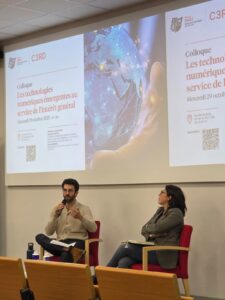
    Le 29 octobre 2025, j’ai eu le plaisir de participer au colloque « Les technologies numériques émergentes au service de l’intérêt général », organisé par le C3RD, qui a réuni chercheurs, enseignants-chercheurs et doctorants autour des enjeux juridiques, éthiques et sociétaux liés aux nouvelles technologies numériques.

    Cette journée d’étude a permis d’aborder des thématiques variées telles que l’intelligence artificielle dans l’action publique, la santé, l’éducation, la cybersécurité, la blockchain, ainsi que les enjeux environnementaux associés aux innovations technologiques.

    J’ai eu l’honneur d’intervenir en qualité de discutante de la communication présentée par Djilali Taiar, doctorant en droit public à l’Université d’Artois, intitulée « La surveillance de l’état de l’environnement à l’ère des technologies numériques ».

    Les échanges ont mis en lumière les profondes transformations induites par les technologies numériques dans la collecte, l’analyse et l’exploitation des données environnementales. Ils ont également souligné les défis juridiques et éthiques liés à l’utilisation croissante de l’intelligence artificielle et des outils numériques dans les processus de surveillance environnementale et de prise de décision publique.

    Cette participation s’inscrit dans la continuité de mes travaux de recherche consacrés à la gouvernance des données environnementales, à l’intelligence artificielle et à l’articulation entre transition numérique et transition écologique.

    Je remercie chaleureusement les organisateurs pour leur invitation ainsi que l’ensemble des intervenants pour la qualité des discussions et des échanges tout au long de cette journée particulièrement stimulante.

    30 octobre 2025
    0 FacebookPinterestLinkedinWhatsappEmail
    ActualitésLiens utiles

    # Visiting Day at ESA (European Space Agency)

    by Stefania Attolini 12 juin 2025

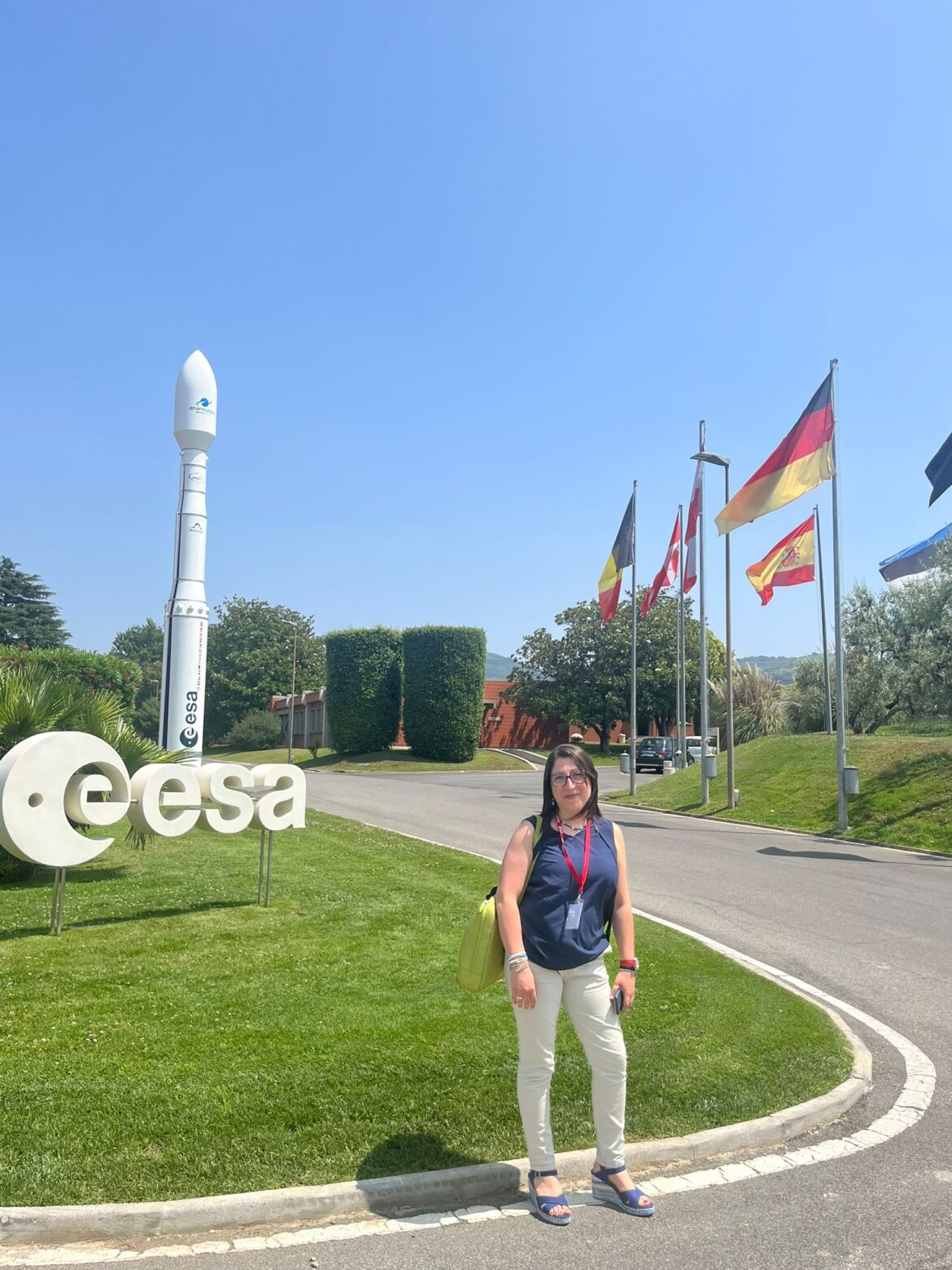
    As part of my ongoing research on Copernicus and environmental data governance, I recently had the opportunity to spend a visiting day at the European Space Agency (ESA).

    The visit provided valuable insights into Europe’s Earth observation infrastructure and the role of satellite data in supporting environmental monitoring, climate action, and evidence-based policymaking. It was also an excellent opportunity to explore the challenges and opportunities related to data accessibility, interoperability, and the growing importance of digital environmental infrastructures.

    A particularly inspiring part of the visit was the discussion with Mr. Eric Monjoux, ESA’s Destination Earth Project Manager. Our exchange focused on the strategic value of Earth observation data and on Destination Earth (DestinE), the European initiative developing a highly accurate digital twin of the Earth. By combining Copernicus data, advanced modelling, artificial intelligence, and high-performance computing, DestinE aims to enhance our capacity to understand, monitor, and anticipate environmental and climate-related changes.

    The visit offered important perspectives for my research and reinforced the central role of European space programmes in addressing contemporary environmental challenges and supporting the green and digital transitions.

    I am grateful to ESA for the warm welcome and for the stimulating discussions that will undoubtedly enrich the next stages of my research.

    12 juin 2025
    0 FacebookPinterestLinkedinWhatsappEmail
    ActualitésLiens utiles

    Nomination à la vice-présidence de la Maison de l’Europe Albertville-Savoie

    by Stefania Attolini 3 juin 2025

    Hier, 2 juin 2025, à l’occasion du Conseil d’Administration de la Maison de l’Europe Albertville-Savoie (MDEAS), j’ai eu l’honneur d’être élue vice-présidente de l’association.

    Je remercie sincèrement les membres du Conseil d’Administration pour leur confiance. Cette nomination représente pour moi une responsabilité importante ainsi qu’une belle opportunité de contribuer davantage aux activités de la MDEAS, dont la mission est de promouvoir la citoyenneté européenne, le dialogue interculturel et les valeurs qui fondent le projet européen.

    Cette nouvelle gouvernance s’inscrit dans la continuité du remarquable travail accompli pendant dix-huit années par Henri-Georges Brun, dont l’engagement constant a largement contribué au rayonnement de la Maison de l’Europe en Savoie. Je tiens à saluer son action et à le remercier pour son investissement au service de l’Europe et des citoyens.

    Aux côtés du nouveau président Luc Martin, de l’ensemble des membres du bureau et du Conseil d’Administration, je suis heureuse de participer à cette nouvelle étape de la vie de l’association. Dans un contexte international marqué par de nombreux défis, la promotion des valeurs européennes, de la démocratie, de la paix et de la coopération apparaît plus essentielle que jamais.

    Je me réjouis de poursuivre cet engagement collectif au service de l’Europe, de ses citoyens et des générations futures.


    3 juin 2025
    0 FacebookPinterestLinkedinWhatsappEmail
    • 1
    • 2
    • 3
    • 4
    juillet 2026
    L M M J V S D
     12345
    6789101112
    13141516171819
    20212223242526
    2728293031  
    « Juin    

    Qui Suis-Je?

    Qui Suis-Je?

    Stefania Attolini, Ph.D

    Juriste et chercheuse en droit de l’Union européenne, spécialisée dans les enjeux juridiques de la transition numérique et verte, la démocratie environnementale et la gouvernance des données.

    Rester en contact

    Facebook Instagram Linkedin Email

    Messages récents

    • L’affaire C-553/24 et la construction d’un contentieux autonome de la subsidiarité

      18 juin 2026
    • Mariage de complaisance et acquisition de la nationalité : la Cour de justice confirme la persistance du pouvoir d’enquête des États membres

      16 juin 2026
    • Le Pacte européen sur la migration et l’asile entre en application

      12 juin 2026
    • The EU Publishes the Code of Practice on Transparency of AI-Generated Content

      10 juin 2026
    • Beyond Refusal: The CJEU’s Rugu Judgment and the Execution of European Arrest Warrants

      8 juin 2026

    Categoriés

    • Actualités (35)
    • Approfondissements (15)
    • Liens utiles (3)
    • Projects (4)
    • TED Project (4)
    • TEDNews (2)
    • Facebook
    • Twitter
    • Instagram
    • Linkedin
    • Email

    @2024 - Stefania Attolini | Privacy Policy - Cookie Policy | Powered by LnW Digital Strategies


    Retour au sommet
    Stefania Attolini
    • Home
    • Stefania Attolini
    • Actualités et Approfondissements
    • Projets
      • T.E.D. – Teaching Environmental Democracy – Project
      • Democracy for Europe and Humanity: EUMANITY DEMOS
        • Working Group on “Environmental Democracy”
      • Understanding Environmental Democracy
    • Teaching Material
      • Artificial Intelligence
    • Publications