• Home
  • Stefania Attolini
  • Actualités et Approfondissements
  • Projets
    • T.E.D. – Teaching Environmental Democracy – Project
    • Democracy for Europe and Humanity: EUMANITY DEMOS
      • Working Group on “Environmental Democracy”
  • Publications
  • Contactez moi
  • Home
Stefania Attolini
  • Home
  • Stefania Attolini
  • Actualités et Approfondissements
  • Projets
    • T.E.D. – Teaching Environmental Democracy – Project
    • Democracy for Europe and Humanity: EUMANITY DEMOS
      • Working Group on “Environmental Democracy”
  • Publications
  • Contactez moi
  • Home
Stefania Attolini
Stefania Attolini
  • Home
  • Stefania Attolini
  • Pubblicazioni
  • Notizie & Eventi
  • Contatti
  • FrançaisFrançais
  • Tag:

    EULaw

    ActualitésApprofondissements

    Le Pacte européen sur la migration et l’asile entre en application

    by Stefania Attolini 12 juin 2026

    Le Pacte européen sur la migration et l’asile entre en application (page site Commission européenne)

    Le 12 juin 2026 marque l’entrée en application du Pacte européen sur la migration et l’asile. Deux ans après son adoption, l’Union européenne dispose désormais d’un nouveau cadre juridique destiné à organiser la gestion des migrations autour de cinq priorités : la protection des frontières extérieures, des procédures d’asile plus rapides, des normes communes en matière d’accueil, un mécanisme permanent de solidarité entre États membres et un renforcement de la coopération avec les pays tiers.

    Cette réforme constitue l’une des évolutions les plus importantes du Système européen commun d’asile depuis sa création. Elle vise à répondre aux difficultés révélées par les crises migratoires de la dernière décennie tout en renforçant la cohérence de l’action européenne.

    Parmi les principales nouveautés figurent la mise en place d’un filtrage obligatoire aux frontières extérieures, une réforme du système Eurodac, des procédures d’asile plus rapides ainsi que de nouvelles règles destinées à limiter les mouvements secondaires entre États membres.

    Le Pacte entend également renforcer la solidarité entre États membres grâce à un mécanisme permanent permettant différentes formes de contribution, notamment par des relocalisations, un soutien opérationnel ou une assistance financière. Il prévoit en outre des règles plus claires pour déterminer l’État responsable de l’examen d’une demande d’asile.

    La réforme accorde enfin une place centrale à la dimension extérieure de la politique migratoire européenne. La coopération avec les pays d’origine et de transit, la lutte contre les réseaux de trafic de migrants et le développement de voies légales de migration sont désormais présentés comme des éléments complémentaires de la gestion des frontières et de l’asile.

    L’entrée en application du Pacte ne constitue toutefois qu’une étape. Comme le soulignent les institutions européennes, la réussite de cette réforme dépendra désormais de sa mise en œuvre effective par les États membres et de leur capacité à concilier efficacité administrative, solidarité européenne et respect des droits fondamentaux.

    12 juin 2026
    0 FacebookPinterestLinkedinWhatsappEmail
    ActualitésApprofondissements

    The EU Publishes the Code of Practice on Transparency of AI-Generated Content

    by Stefania Attolini 10 juin 2026

    Code of Practice on Transparency of AI-Generated Content

    On 10 June 2026, the European Commission published the final Code of Practice on Transparency of AI-Generated Content, a voluntary instrument designed to help providers and deployers of generative AI systems comply with the transparency obligations established by the EU AI Act. These obligations will start to apply on 2 August 2026.

    The Code addresses one of the most pressing challenges raised by generative AI: how to ensure that citizens can recognise when content has been created or manipulated by artificial intelligence. As synthetic text, images, audio and video become increasingly sophisticated, transparency is emerging as a key tool for preserving trust in the information ecosystem and reducing the risks of misinformation, manipulation and deception.

    The document is divided into two sections:

    • The first concerns providers of generative AI systems and explains how AI-generated or AI-manipulated content should be marked and made detectable. The Code is structured around four core commitments concerning the marking of AI-generated content, the provision of detection mechanisms, compliance with quality requirements such as effectiveness, reliability, robustness and interoperability, and the establishment of testing and compliance procedures. To this end, it promotes a multi-layered approach based on machine-readable metadata, watermarking techniques and detection mechanisms capable of identifying synthetic content.
    • The second section focuses on deployers of AI systems, clarifying their obligations to label deepfakes and AI-generated or AI-manipulated content published on matters of public interest. The objective is to guarantee that users receive clear information when interacting with synthetic content and can make informed decisions about its reliability.

    Although voluntary, the Code is likely to play an important role in the implementation of the AI Act. Once approved by the European Commission and the AI Board, adherence to the Code may help organisations demonstrate compliance with the transparency requirements set out in Article 50 AI Act.

    Beyond its practical relevance, the initiative reflects the broader European approach to AI governance: promoting innovation while ensuring accountability, transparency and the protection of fundamental rights. In this respect, the Code represents another significant step towards the development of a trustworthy and human-centric AI ecosystem in Europe.

    The publication of the Code does not conclude the implementation process. The European Commission has announced that the Code will be complemented by forthcoming Guidelines on the transparency obligations under Article 50 of the AI Act. These Guidelines are expected to clarify the scope of the legal requirements, address issues not covered by the Code, and provide practical guidance for providers and deployers. Their publication will be particularly important in resolving interpretative questions concerning the notions of AI-generated and AI-manipulated content, the disclosure obligations applicable to deepfakes, and the relationship between transparency requirements and editorial control. As such, the Code should be viewed as an important first step within a broader regulatory framework that is still evolving.


    10 juin 2026
    0 FacebookPinterestLinkedinWhatsappEmail
    ActualitésApprofondissements

    The EU Strategic Roadmap for Digitalisation and AI in the Energy Sector: Pillars and Flagship Actions

    by Stefania Attolini 4 juin 2026

    The European Commission’s Strategic Roadmap for Digitalisation and AI in the Energy Sector sets out a vision for a smarter, more sustainable and more resilient European energy system. By combining digital technologies, artificial intelligence and advanced data governance, the Roadmap aims to strengthen Europe’s competitiveness, accelerate the clean energy transition and enhance technological sovereignty.

    Pillar I – Energy for AI

    The first pillar addresses the growing energy demand generated by artificial intelligence and data centres. It seeks to ensure that digital infrastructure is integrated sustainably into the energy system through improved grid planning, greater use of renewable energy, enhanced energy efficiency and demand-side flexibility. The objective is to transform data centres from major energy consumers into active contributors to the energy transition.

    Pillar II – Digitalisation and AI for the Energy System

    The second pillar focuses on deploying digital technologies and AI throughout the energy value chain. Smart grids, smart meters, digital twins and AI-powered tools are expected to improve grid management, facilitate the integration of renewable energy sources, optimise energy consumption and increase the resilience of energy infrastructures.

    Pillar III – Data for AI and the Energy System

    The third pillar recognises that data are the foundation of a digital energy ecosystem. The Roadmap therefore promotes a common European framework for energy data exchange and interoperability, enabling the development of innovative energy services and the training of AI models based on high-quality and trustworthy datasets.

    Alongside these three pillars, the Roadmap identifies seven flagship actions. These include measures to support the sustainable integration of data centres, establish an EU rating scheme for their environmental performance, accelerate the deployment of smart grids and smart meters, develop European AI models for energy applications, create a framework for cross-border energy data exchange, strengthen AI safety and cybersecurity, and improve the monitoring of digitalisation across the European energy sector.

    Together, these initiatives aim to create a data-driven and AI-enabled energy system capable of supporting Europe’s competitiveness, energy security and climate objectives in the years ahead.

    (Versione française)

    La Commission européenne a présenté sa Feuille de route stratégique pour la numérisation et l’intelligence artificielle dans le secteur de l’énergie, qui vise à construire un système énergétique plus intelligent, durable et résilient. En s’appuyant sur les technologies numériques, l’intelligence artificielle et la gouvernance des données, cette stratégie entend renforcer la compétitivité européenne, accélérer la transition énergétique et consolider la souveraineté technologique de l’Union.

    Pilier I – L’énergie au service de l’IA

    Le premier pilier répond à l’augmentation de la demande énergétique liée à l’essor de l’intelligence artificielle et des centres de données. Il vise à assurer une intégration durable de ces infrastructures grâce à une meilleure planification des réseaux, à l’utilisation accrue des énergies renouvelables, à l’amélioration de l’efficacité énergétique et au développement de mécanismes de flexibilité. L’objectif est de faire des centres de données des acteurs de la transition énergétique plutôt que de simples consommateurs d’énergie.

    Pilier II – Numérisation et IA au service du système énergétique

    Le deuxième pilier encourage le déploiement des technologies numériques et de l’intelligence artificielle dans l’ensemble du secteur énergétique. Les réseaux intelligents, les compteurs communicants, les jumeaux numériques et les solutions fondées sur l’IA doivent permettre une meilleure gestion des réseaux, une intégration accrue des énergies renouvelables, une optimisation de la consommation énergétique et un renforcement de la résilience des infrastructures.

    Pilier III – Les données au service de l’IA et du système énergétique

    Le troisième pilier repose sur l’idée que les données constituent la ressource essentielle de la transformation numérique. La feuille de route prévoit ainsi la mise en place d’un cadre européen favorisant l’échange et l’interopérabilité des données énergétiques afin de soutenir le développement de services innovants et l’entraînement de modèles d’intelligence artificielle fiables et performants.

    À côté de ces trois piliers, la Commission identifie sept actions phares destinées à concrétiser les objectifs de la stratégie. Celles-ci concernent notamment l’intégration durable des centres de données, la création d’un système européen de notation environnementale pour ces infrastructures, l’accélération du déploiement des réseaux et compteurs intelligents, le développement de modèles européens d’IA appliqués à l’énergie, la mise en place d’un cadre commun pour l’échange des données énergétiques, le renforcement de la sécurité de l’IA et de la cybersécurité, ainsi que le suivi des progrès de la numérisation du secteur énergétique.

    Dans son ensemble, cette feuille de route marque une étape importante dans l’intégration des politiques énergétiques et numériques de l’Union européenne et illustre l’ambition de construire un système énergétique fondé sur les données, l’intelligence artificielle et l’innovation technologique.

    4 juin 2026
    0 FacebookPinterestLinkedinWhatsappEmail
    Actualités

    European Tech Sovereignty and Open Source: The European Commission’s New Digital Strategy

    by Stefania Attolini 4 juin 2026

    Communication of the European Commission on European Tech Sovereignty, accompanied by an EU Open Source Strategy COM(2026)503

    Communication of the European Commission on European Tech Sovereignty, accompanied by an EU Open Source Strategy COM(2026)503 (Annexe)

    English Version
    On 3 June 2026, the European Commission unveiled a new Communication on European technological sovereignty, accompanied by a dedicated strategy on open source. This initiative marks an important step in the evolution of the European Union’s digital policy, signalling a shift from a primarily regulatory approach towards a more proactive industrial and technological strategy. The objective is clear: to strengthen Europe’s capacity to develop, control and scale critical technologies that are essential for its competitiveness, economic security and democratic resilience.
    According to the Commission, Europe remains heavily dependent on non-EU providers for key digital infrastructures, including cloud services, semiconductors, artificial intelligence solutions and other strategic technologies. In an increasingly fragmented geopolitical environment, such dependencies may become significant vulnerabilities, exposing European economies and institutions to external pressures and disruptions. Technological sovereignty is therefore defined as the EU’s ability to develop, manage and deploy critical technologies and infrastructures while reducing excessive strategic dependencies.
    Importantly, the Commission stresses that technological sovereignty should not be understood as protectionism or technological isolation. Rather, it is conceived as a means of preserving Europe’s openness while ensuring that the Union retains sufficient autonomy to safeguard its interests and values in a rapidly changing global landscape.
    One of the most noteworthy aspects of the Communication is the central role attributed to open source technologies. The Commission recognises that open source software can contribute significantly to innovation, competition, transparency and security. By reducing dependence on proprietary solutions controlled by a limited number of global actors, open source technologies can help strengthen Europe’s digital autonomy while fostering a more dynamic and competitive innovation ecosystem.
    The strategy therefore proposes a range of measures aimed at supporting strategic open source projects, encouraging the adoption of open technologies in public administrations and promoting the development of European alternatives in critical areas such as cloud computing, operating systems, artificial intelligence and digital infrastructure. These initiatives seek to build a stronger and more resilient European digital ecosystem capable of competing on a global scale.
    Beyond economic and industrial considerations, the Commission also highlights the normative dimension of technological sovereignty. The development and deployment of digital technologies should remain aligned with fundamental European values, including transparency, data protection, fair competition, inclusiveness and respect for fundamental rights. In this sense, technological sovereignty is presented not only as an economic objective but also as a means of preserving the European model in the digital age.
    Ultimately, the Communication reflects the European Union’s ambition to move beyond the role of regulator and become a leading actor in the creation, deployment and governance of strategic technologies. Whether these ambitions can be translated into concrete industrial capacity, innovation and global influence will be one of the key challenges for the coming decade.

    Version française
    Le 3 juin 2026, la Commission européenne a présenté une nouvelle Communication sur la souveraineté technologique européenne, accompagnée d’une stratégie dédiée à l’open source. Cette initiative marque une étape importante dans l’évolution des politiques numériques de l’Union européenne, traduisant la volonté de compléter son rôle traditionnel de régulateur par une véritable stratégie industrielle et technologique. L’objectif est de renforcer la capacité de l’Europe à développer, maîtriser et déployer les technologies essentielles à sa compétitivité, à sa sécurité économique et à son autonomie stratégique.
    Selon la Commission, l’Union européenne demeure fortement dépendante de fournisseurs non européens dans des secteurs clés tels que les services cloud, les semi-conducteurs, l’intelligence artificielle et d’autres infrastructures numériques critiques. Dans un contexte géopolitique marqué par une concurrence accrue et une instrumentalisation croissante des dépendances économiques, ces vulnérabilités constituent un défi majeur pour l’Europe. La souveraineté technologique est ainsi définie comme la capacité de l’Union à développer, contrôler et exploiter les technologies et infrastructures stratégiques tout en réduisant les dépendances excessives à l’égard d’acteurs extérieurs.
    La Commission souligne toutefois que cette souveraineté ne doit pas être interprétée comme une forme de protectionnisme ou de repli sur soi. Au contraire, il s’agit de permettre à l’Union de rester ouverte aux échanges internationaux tout en disposant des moyens nécessaires pour protéger ses intérêts et ses valeurs dans un environnement mondial en profonde mutation.
    L’un des aspects les plus remarquables de cette Communication réside dans la place accordée aux technologies open source. La Commission reconnaît que les logiciels à code source ouvert constituent un levier essentiel pour stimuler l’innovation, renforcer la concurrence, accroître la transparence et améliorer la sécurité des infrastructures numériques. En réduisant la dépendance à l’égard de solutions propriétaires contrôlées par un nombre limité d’acteurs mondiaux, l’open source peut contribuer au renforcement de l’autonomie numérique européenne.
    La stratégie prévoit ainsi plusieurs mesures destinées à soutenir les projets open source stratégiques, à favoriser l’adoption de technologies ouvertes par les administrations publiques et à encourager le développement d’alternatives européennes dans des domaines critiques tels que le cloud computing, les systèmes d’exploitation, l’intelligence artificielle et les infrastructures numériques. L’ambition est de construire un écosystème numérique européen plus robuste, innovant et compétitif.
    Au-delà des considérations économiques et industrielles, la Commission insiste également sur la dimension normative de la souveraineté technologique. Le développement des technologies numériques doit rester conforme aux valeurs fondamentales de l’Union, notamment la transparence, la protection des données, la concurrence loyale, l’inclusion et le respect des droits fondamentaux. La souveraineté technologique apparaît ainsi non seulement comme un objectif économique, mais également comme un instrument de préservation du modèle européen à l’ère numérique.
    Cette Communication illustre finalement l’ambition de l’Union européenne de dépasser son rôle de simple régulateur pour devenir un acteur majeur dans la conception, le développement et la gouvernance des technologies stratégiques. La capacité de l’Europe à transformer cette vision en investissements, en innovation et en leadership technologique constituera l’un des enjeux déterminants de la prochaine décennie.

    4 juin 2026
    0 FacebookPinterestLinkedinWhatsappEmail
    Actualités

    Meta v Commission : The General Court Clarifies the Scope of Judicial Review under the DMA

    by Stefania Attolini 3 juin 2026

    Judgment of the General Court, Meta Platforms, Inc. v European Commission of 3 June 2026

    On 3 June 2026, the General Court delivered one of its first significant judgments on the application of the Digital Markets Act (DMA) in Meta Platforms Ireland v Commission (T-1078/23). The ruling provides important guidance on both the procedural requirements governing the Commission’s enforcement powers and the substantive operation of the DMA’s gatekeeper designation regime.

    Meta challenged the Commission’s September 2023 decision designating several of its services under the DMA, in particular Messenger and Facebook Marketplace. The company argued that the Commission had incorrectly concluded that these services met the conditions set out in Article 3 DMA.

    The Court reached a mixed outcome. It upheld the designation of Messenger, while annulling the decision concerning Facebook Marketplace.

    From a procedural perspective, the judgment confirms that the Commission enjoys a broad margin of discretion when applying the DMA and assessing complex digital market realities. However, the Court also emphasises that such discretion remains subject to meaningful judicial review. The Commission must provide adequate reasoning and demonstrate, on the basis of sufficient evidence, why a service satisfies the statutory criteria laid down by the Regulation.

    This point is particularly evident in relation to Facebook Marketplace. The Court did not exclude the possibility that Marketplace could qualify as an important gateway between business users and end users. Rather, it found that the Commission had failed to substantiate that conclusion adequately. The judgment therefore reaffirms a fundamental principle of EU administrative law: even within the DMA’s ex ante regulatory framework, regulatory discretion must be accompanied by robust reasoning.

    The judgment is equally significant from a substantive perspective. The DMA establishes quantitative thresholds that create presumptions regarding gatekeeper status. Once those thresholds are met, the burden shifts to the undertaking to rebut the presumption and demonstrate that the relevant service does not fulfil the qualitative conditions required by Article 3 DMA.

    With regard to Messenger, the Court concluded that Meta had failed to provide sufficient evidence to overcome those presumptions. In doing so, it confirmed that the burden of rebuttal under the DMA is demanding and that companies seeking to challenge a designation must present convincing evidence capable of undermining the Commission’s assessment.

    An important aspect of the case is that the practical relevance of the Marketplace issue had already diminished before the judgment was delivered. In 2024, the Commission withdrew Facebook Marketplace’s designation after the service no longer met the relevant quantitative thresholds under the DMA. As a result, the annulment has limited immediate regulatory consequences.

    Nevertheless, the ruling remains highly relevant. Its importance lies not in the current status of Marketplace, but in the guidance it provides regarding the evidentiary standards and reasoning requirements that will govern future DMA enforcement.

    As one of the first substantive judgments on the Digital Markets Act, Meta v Commission offers an early indication of how EU courts are likely to approach disputes arising under the new regulatory framework. The message is clear: while the Commission retains significant discretion in identifying and regulating gatekeepers, that discretion must be exercised through decisions that are properly reasoned, evidence-based, and capable of withstanding judicial scrutiny.

    3 juin 2026
    0 FacebookPinterestLinkedinWhatsappEmail
    ActualitésApprofondissementsLiens utiles

    Digital Borders and the Future of the Area of Freedom, Security and Justice

    by Stefania Attolini 29 mai 2026

    The European Union is entering a new phase in the evolution of the Area of Freedom, Security and Justice.

    As the Pact on Migration and Asylum approaches its full application in June 2026 and the Entry/Exit System (EES) becomes operational across the Schengen Area, the governance of migration and border management is increasingly shaped by digital technologies, biometric identification, and large-scale information systems.

    These reforms are intended to strengthen migration management, improve security, and enhance cooperation among Member States. At the same time, they raise important legal and constitutional questions concerning privacy, data protection, proportionality, and the protection of fundamental rights.

    The ongoing transformation of the Area of Freedom, Security and Justice therefore reflects a broader development within European integration: the growing interconnection between internal security, digital governance, and the management of mobility.

    Recent reports have also highlighted practical concerns linked to the deployment of the Entry/Exit System, including delays, operational challenges, and potential disruptions at major border crossing points and airports. These developments show how technological governance is becoming an increasingly central component of European migration and security policy.

    One crucial question nevertheless remains open: can the European Union reconcile increasingly sophisticated systems of border control with the fundamental values of freedom, rights, and the rule of law on which the Area of Freedom, Security and Justice is founded?

    Useful Sources

    • Pact on Migration and Asylum – European Commission
      https://home-affairs.ec.europa.eu/policies/migration-and-asylum/pact-migration-and-asylum_en
    • Commission Report on the Implementation of the Pact (May 2026)
      https://home-affairs.ec.europa.eu/news/commission-reports-progress-implementing-pact-migration-and-asylum-2026-05-08_en
    • Entry/Exit System (EES) – European Commission
      https://home-affairs.ec.europa.eu/policies/schengen/smart-borders/entry-exit-system_en
    • Travel Europe – Entry/Exit System Guide
      https://travel-europe.europa.eu/en/ees
    • eu-LISA – Entry/Exit System Information
      https://www.eulisa.europa.eu/Activities/Large-Scale-It-Systems/ees
    • The Guardian – Concerns over EES implementation and border delays
      https://www.theguardian.com/business/2026/apr/30/eu-entry-exit-system-ees-queues-missed-flights-readers
    29 mai 2026
    0 FacebookPinterestLinkedinWhatsappEmail
    Actualités

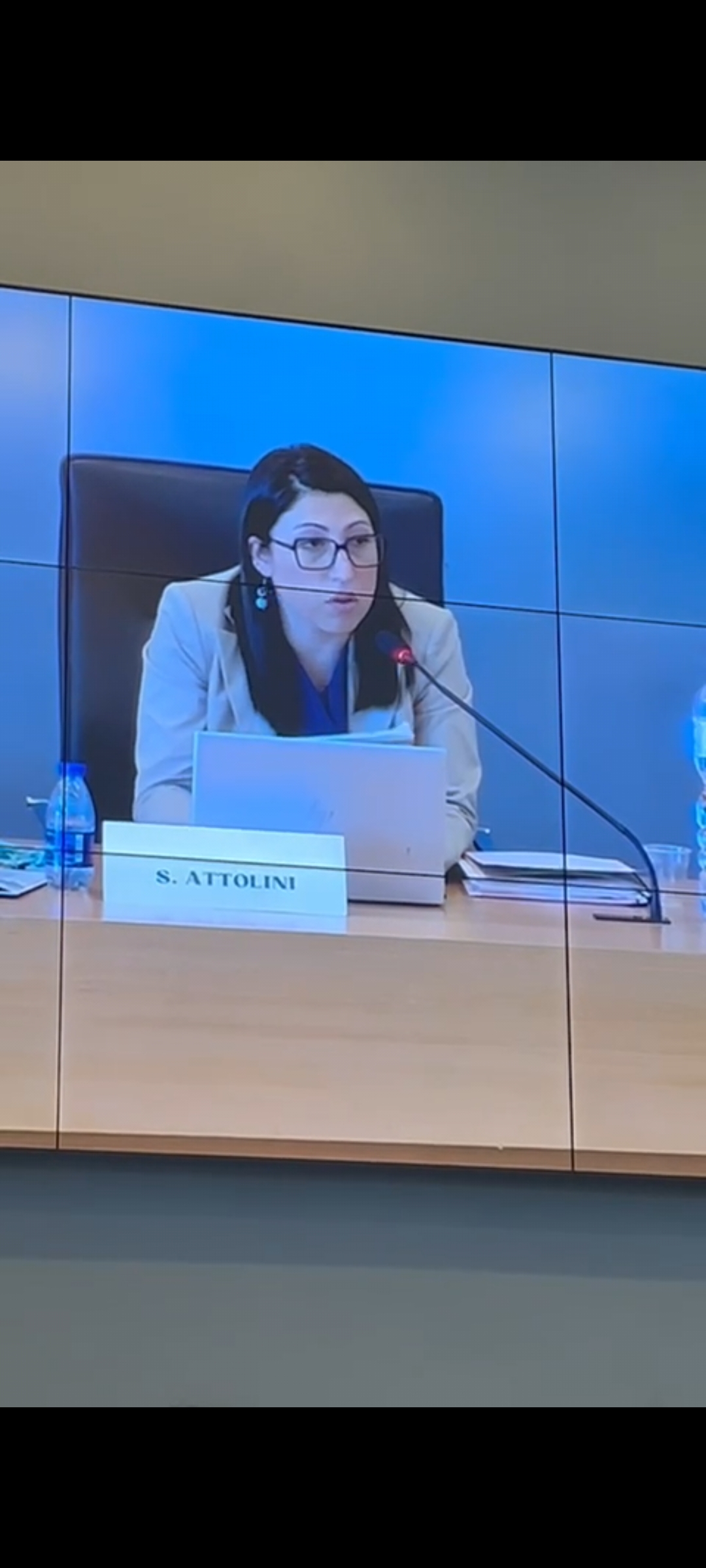
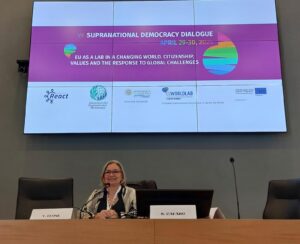
    Supranational Democracy Dialogues 2025 – VII ed.

    by Stefania Attolini 2 mai 2025

    I was pleased to participate in the Supranational Democracy Dialogues 2025, presenting my paper:

    AI for the Environment: Earth Monitoring Evolutions and Legal Issues

    My contribution explored the growing interaction between artificial intelligence and Earth observation systems, focusing on the European Union’s Copernicus programme and its role in supporting environmental monitoring, disaster prevention, and evidence-based policymaking.

    The discussion highlighted how AI can enhance the analysis of large environmental datasets, strengthen predictive capabilities, and contribute to the implementation of environmental protection principles such as prevention and precaution. At the same time, important legal questions remain open regarding transparency, data governance, reliability, and access to environmental knowledge.

    As the European Union increasingly promotes the green and digital transitions as mutually reinforcing objectives, the governance of AI-driven environmental monitoring deserves greater attention from both policymakers and legal scholars.

    Many thanks to the organizers and participants for the stimulating exchange of ideas and perspectives.

    2 mai 2025
    0 FacebookPinterestLinkedinWhatsappEmail
    juin 2026
    L M M J V S D
    1234567
    891011121314
    15161718192021
    22232425262728
    2930  
    « Mai    

    Qui Suis-Je?

    Qui Suis-Je?

    Stefania Attolini, Ph.D

    Juriste et chercheuse en droit de l’Union européenne, spécialisée dans les enjeux juridiques de la transition numérique et verte, la démocratie environnementale et la gouvernance des données.

    Rester en contact

    Facebook Instagram Linkedin Email

    Messages récents

    • Le Pacte européen sur la migration et l’asile entre en application

      12 juin 2026
    • The EU Publishes the Code of Practice on Transparency of AI-Generated Content

      10 juin 2026
    • Beyond Refusal: The CJEU’s Rugu Judgment and the Execution of European Arrest Warrants

      8 juin 2026
    • The EU Strategic Roadmap for Digitalisation and AI in the Energy Sector: Pillars and Flagship Actions

      4 juin 2026
    • European Tech Sovereignty and Open Source: The European Commission’s New Digital Strategy

      4 juin 2026

    Categoriés

    • Actualités (32)
    • Approfondissements (12)
    • Liens utiles (3)
    • Projects (4)
    • TED Project (4)
    • TEDNews (2)
    • Facebook
    • Twitter
    • Instagram
    • Linkedin
    • Email

    @2024 - Stefania Attolini | Privacy Policy - Cookie Policy | Powered by LnW Digital Strategies


    Retour au sommet
    Stefania Attolini
    • Home
    • Stefania Attolini
    • Actualités et Approfondissements
    • Projets
      • T.E.D. – Teaching Environmental Democracy – Project
      • Democracy for Europe and Humanity: EUMANITY DEMOS
        • Working Group on “Environmental Democracy”
    • Publications
    • Contactez moi